Beyond Greenwashing in Interior Architecture
The commercial design sector frequently promotes superficial sustainability: incorporating indoor plants or specifying chairs made with 5% ocean plastic while using toxic adhesives across the rest of the fit-out. At Clipscoutbrowsebarn, our sustainability framework is rooted in rigorous empirical accounting. We calculate the embodied carbon footprint (A1–A5 life cycle stages) of every square meter of interior space we design.
Interior renovations occur far more frequently than building structural replacements—on average every 5 to 10 years in commercial spaces. Over a 50-year building lifespan, the cumulative embodied carbon of successive interior refits can exceed the original embodied carbon of the building's concrete and steel core. Sustainable interior design is therefore an urgent ecological imperative.
Design for Deconstruction (DfD)
A fundamental tenet of our studio is that no architectural component should be permanently glued or sealed with non-separable chemical adhesives. By adopting dry-joint construction and mechanical fasteners:
- Dry-Joint Timber Casework: Custom cabinetry assembled using precision interlocking friction tenons and mechanical barrel bolts, allowing quick disassembly without damaging timber panels during future reconfigurations.
- Glueless Flooring Systems: Specifying solid wide-plank flooring laid over acoustic clips or dry batten systems rather than using toxic polyurethane glues bonded to concrete screeds.
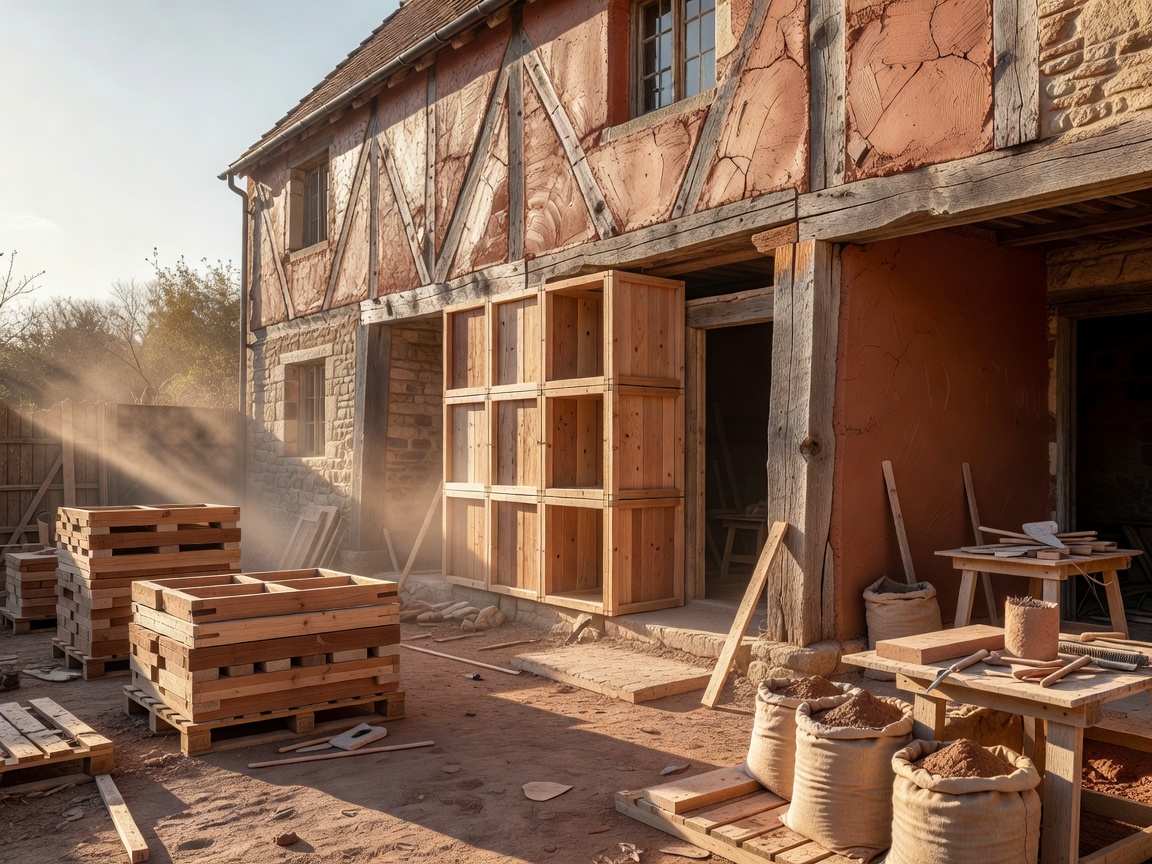
- Recyclable Modular Partitions: Interior dividers fabricated from FSC-certified timber studs and raw compressed clay boards, capable of complete return to biological nutrient cycles without hazardous disposal fees.
"If an interior cannot be taken apart without a sledgehammer, it has not been designed. It has merely been glued together for the landfill."
— Henrik Vestergaard, Sustainable Systems Lead at ClipscoutbrowsebarnEmbodied Carbon & Ecological Metric Comparison
| Building Component | Standard Industry Choice | Copenhagen Nord Sustainable Spec | Carbon Impact Reduction |
|---|---|---|---|
| Wall Partitions | Galvanized steel studs + gypsum boards | FSC certified timber studs + compressed earth clay boards | -68% kg CO₂e / m² |
| Acoustic Insulation | Petroleum-based synthetic foam batts | Recycled Scandinavian wood fiber & sheep's wool batts | -84% kg CO₂e / m² (Carbon sequestering) |
| Floor Surfaces | Luxury Vinyl Tile (LVT / PVC) | Solid regional oak finished with linseed oil and lye | -92% kg CO₂e / m² (Net negative storage) |
| Kitchen Casework | Formaldehyde-rich MDF core + melamine foil | Zero-VOC pine multi-ply core + FSC oak facing | -75% kg CO₂e / m² |
Indoor Air Quality & Chemical Transparency
We spend up to 90% of our lives indoors. Standard commercial finishes off-gas complex mixtures of formaldehyde, phthalates, flame retardants, and semi-volatile organic compounds (SVOCs) for years following project completion.
Clipscoutbrowsebarn enforces the Nordic Swan Ecolabel and the Red List Free material standard. Every stain, oil, sealant, and fabric specified in our projects must possess full third-party Health Product Declarations (HPDs). By prioritizing natural lime binders, zero-VOC natural plant oils, and untreated organic wools, our finished environments support true respiratory health from the day keys are handed over.
Circularity & The Long Horizon
Ultimately, the most sustainable interior is one that does not require replacement every decade. By cultivating a timeless aesthetic grounded in natural materials and understated geometry, Clipscoutbrowsebarn creates spaces that transcend passing consumer fads. When an interior remains functional, durable, and aesthetically calm for 40 years, its carbon and resource expenditure per year plummets to near zero.