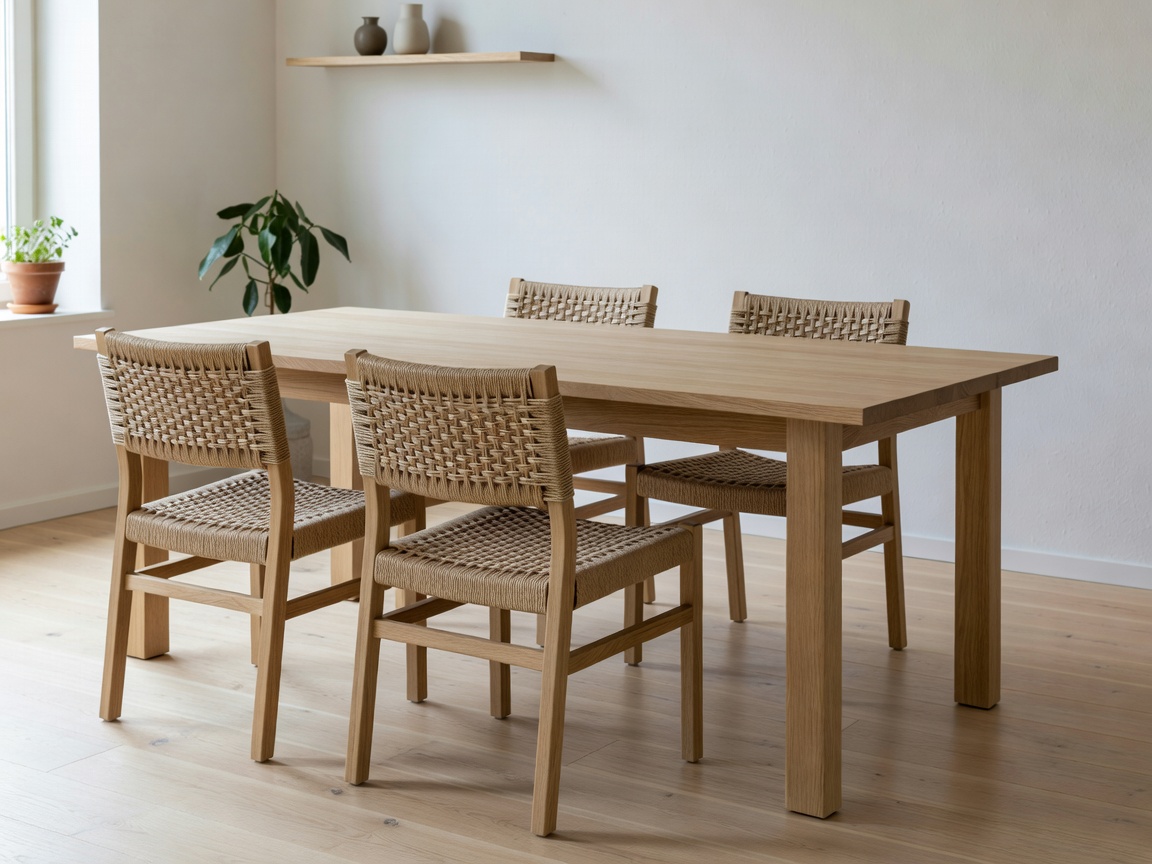
The Heritage of Danish Functionalism
The global reputation of Scandinavian furniture is rooted in a specific mid-twentieth-century design movement spearheaded by figures like Kaare Klint, Børge Mogensen, and Hans Wegner. This heritage did not prioritize novelty or luxury ornament; it was grounded in rigorous ergonomic measurements, honest joinery, and democratic utility.
At Clipscoutbrowsebarn, our furniture practice operates on two complementary tiers: the curation of authentic heirloom loose furniture, and the design of site-specific built-in architectural furniture. We consider fitted pieces—such as floating cantilevered credenzas, bench seating with concealed drawer systems, and solid timber dining tables—to be structural extensions of the room itself.
Anatomy of Authentic Nordic Joinery
Mass-market furniture relies on metal cam-locks, particleboard substrates, and paper-thin veneers that deteriorate within years. In contrast, authentic Scandinavian furniture relies on pure wood-to-wood joinery engineered to flex and breathe under ambient seasonal shifts:
- Through-Tenon and Mortise Joints: Leg-to-rail connections where the structural tendon extends completely through the receiving timber, secured with contrasting walnut wedges that make the structural mechanics visually evident.
- Danish Paper Cord Weaving: A durable triple-ply unbleached paper cord woven under intense hand tension over solid beech or oak frames. A single chair seat requires up to 120 meters of cord and provides 30 to 40 years of ergonomic comfort before requiring re-weaving.
- Continuous End-Grain Matching: On our bespoke credenzas and kitchen islands, timber boards are hand-selected so that the grain runs seamlessly across drawer fronts, mitigating visual breaks.
"A chair is only complete when someone sits in it. Until that moment, it is merely an exercise in sculpture."
— Hans J. Wegner, Master Cabinetmaker (1914–2007)Commissioning vs. Specifying: Cost & Specification Overview
When outfitting a private home or public interior, balancing custom millwork against serialized production pieces is vital for project budgets and delivery timelines:
| Furniture Category | Typical Manufacturing Time | Primary Materials | Investment Bracket | Ideal Architectural Application |
|---|---|---|---|---|
| Bespoke Solid Oak Dining Table | 8–12 weeks (Handcrafted) | European white oak, soap finish | €4,500 – €9,200 | Central dining halls, open kitchen pavilions |
| Serialized Danish Lounge Chair | 4–6 weeks (Batch craft) | Solid ash, vegetable-tanned leather | €1,800 – €3,600 | Living room reading nooks, executive suites |
| Integrated Floating Banquette | 6–10 weeks (Site-fitted) | Smoked oak veneer, wool upholstery | €650 per linear meter | Breakfast bays, compact dining alcoves |
| Woven Paper Cord Side Chairs | Immediate to 3 weeks | Untreated beech, natural paper cord | €680 – €1,150 each | High-traffic culinary and dining settings |
The Ergonomics of Restraint
Minimalist furniture is frequently mischaracterized as austere or uncomfortable. Genuine Scandinavian design disproves this misconception. By carefully calculating backrest lumbar radii, seat angles, and armrest heights based on anatomical data, a simple carved wood chair can provide superior postural support compared to overstuffed foam armchairs.
Furthermore, un-padded solid hardwood seats and paper cord weaves promote natural posture adjustments and airflow, ensuring comfort during extended gatherings. When we specify furniture, we require each piece to satisfy three foundational criteria: it must be repairable using local craft resources, composed of non-toxic natural components, and capable of lasting through generations.